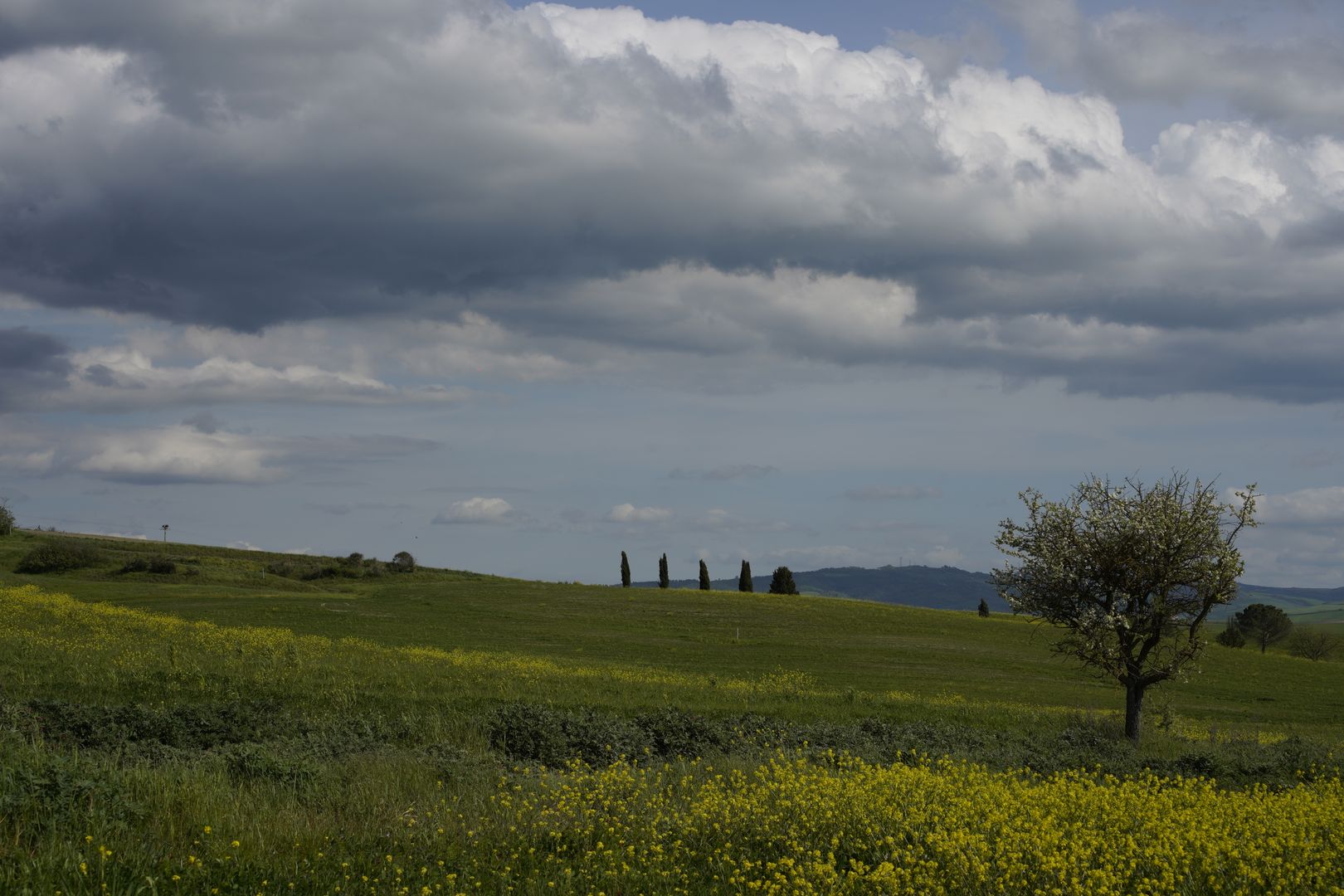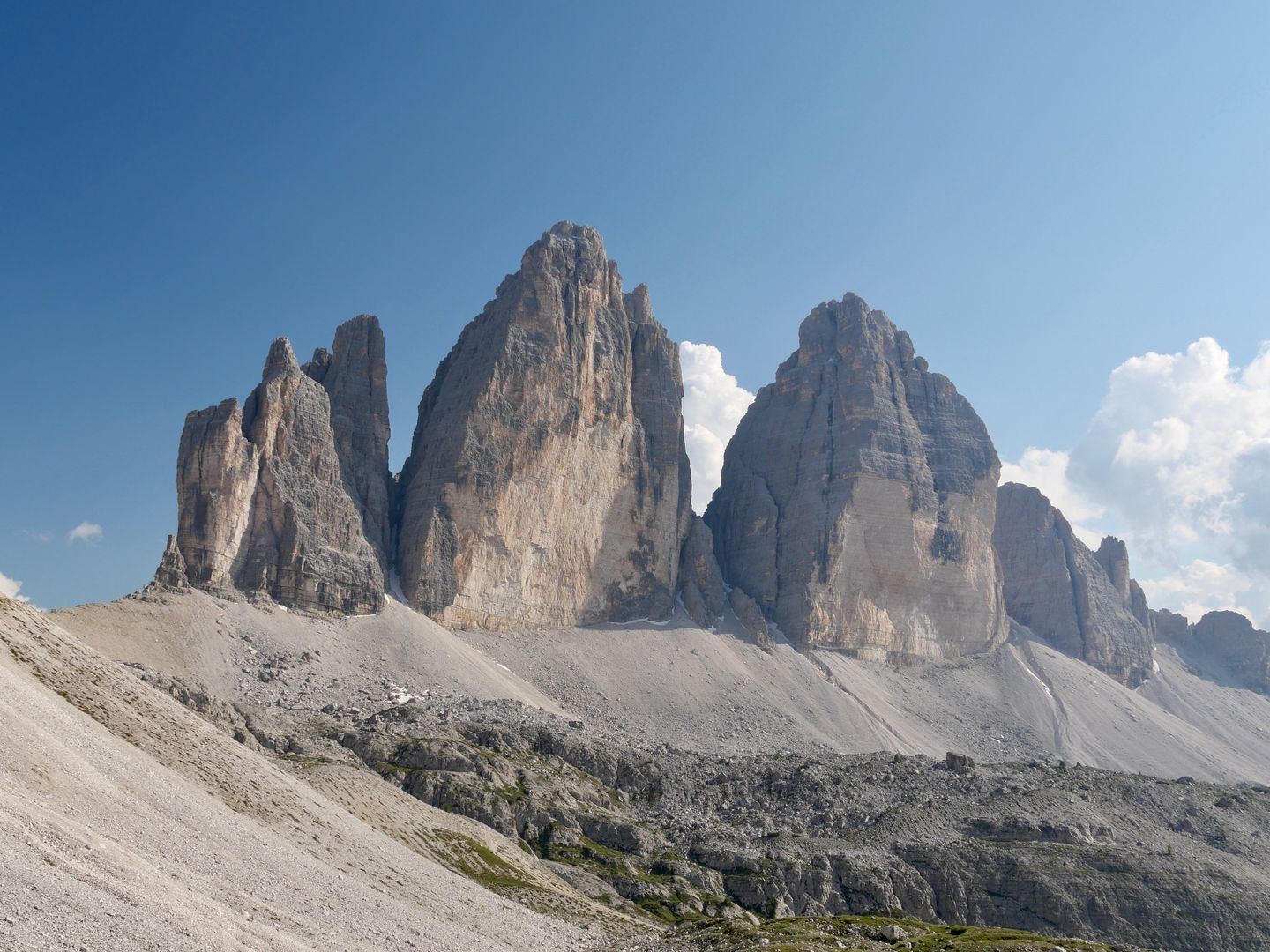

The Dolomites are pale limestone towers and pinnacles in northern Italy, a landscape unlike the rest of the Alps and unlike anywhere else in the country. They are also the Italian region most likely to trip up a first-time planner, because they do not simply "open." The infrastructure that makes them accessible — cable cars, mountain huts, high passes — runs on two seasons with dead zones between them. Understand that rhythm and the rest falls into place.
Where the Dolomites are
They straddle the provinces of South Tyrol, Trentino, and Belluno in Italy's far north, near the Austrian border. This is bilingual country — German and Italian both official in South Tyrol, with Ladin spoken in some valleys — and the culture, food, and place names reflect it. Most visitors fly into Venice, Verona, or Innsbruck and drive in.
When to go
This is the decision that makes or breaks a trip. For summer hiking, aim for roughly late June to late September, when the lifts and rifugi (mountain huts) are open and the trails are snow-free. For skiing, December to March. The traps are the shoulder gaps: much of May, and the stretch from late October into December, when many cable cars and huts shut and the high trails can still be under snow. Late June and September are the quieter ends of the hiking season.
Do you need a car?
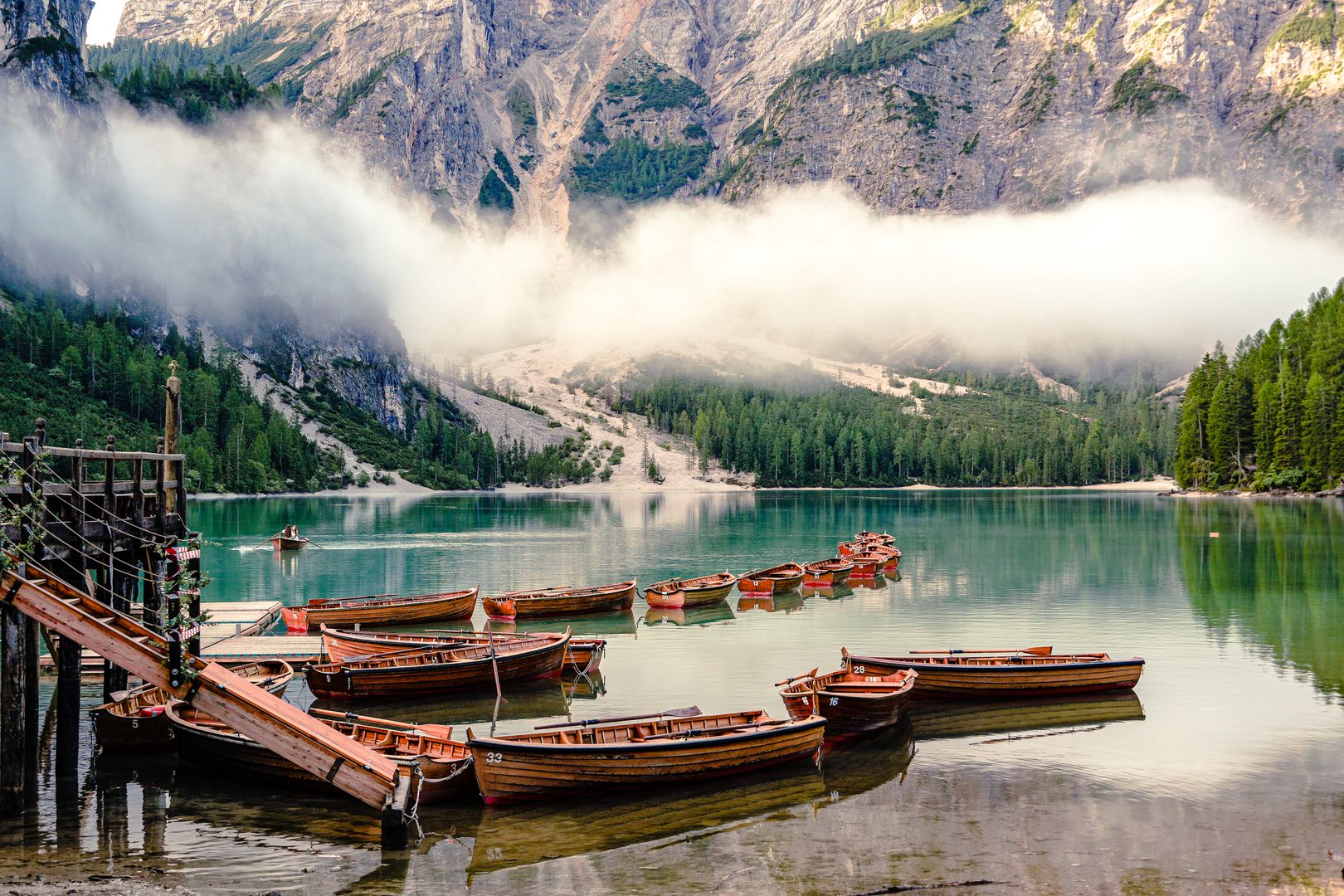
Effectively, yes. Buses do link the main valley towns, but they are infrequent and the region's sights and trailheads are widely spread across passes and side valleys. A car lets you reach the popular spots early — the Tre Cime toll road and Lago di Braies both fill their car parks by mid-morning in season — and string together viewpoints that public transport cannot. Book accommodation with parking.
Where to base yourself
Ortisei in the Val Gardena is a well-connected and scenic first choice, with cable cars up to the Seceda ridge and the vast Alpe di Siusi meadow. Cortina d'Ampezzo to the east is the more upmarket base and the gateway to the Tre Cime di Lavaredo. For the famous view of a small church against jagged peaks — and a quieter stay — the Val di Funes is hard to beat. Pick one valley and settle rather than hopping nightly.
The big sights
The Tre Cime di Lavaredo, three sheer peaks circled by an easy and spectacular loop trail, are the icon. Seceda's tilted grassy ridge above Ortisei is reached by cable car for one of the great alpine panoramas. Lago di Braies is the emerald lake with the wooden boathouse that fills a thousand photos — go at dawn to have it. The Alpe di Siusi is Europe's largest high-altitude meadow, gentle and enormous.
Hiking without being a mountaineer
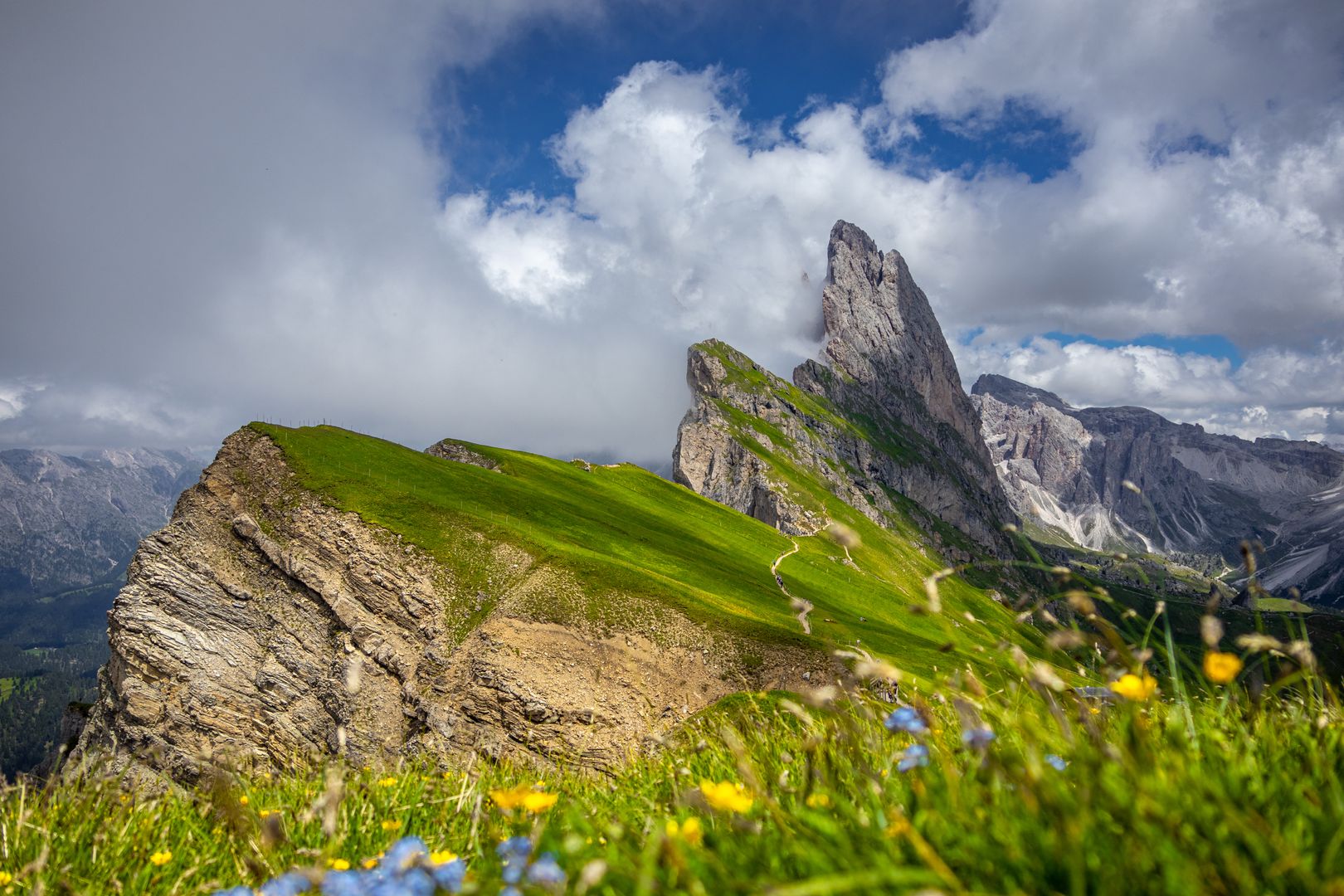
You do not need ropes or serious fitness to enjoy the high Dolomites. Cable cars do the climbing, delivering you to panoramic trails that run more or less level along the ridges, and the mountain huts serve food and drink along the way. Start with the easy high routes and the short walks to the famous viewpoints; save the long or technical trails for when you know you want them.
Frequently Asked Questions
When is the best time to visit the Dolomites?
For hiking, roughly late June to late September, when cable cars and mountain huts are open and the trails are clear of snow. For skiing, December to March. Avoid the shoulder gaps — much of May and from late October into December — when many lifts and rifugi close and the high trails may still hold snow.
Do you need a car in the Dolomites?
It helps a great deal. Buses connect the main valleys but are limited and slow, and the trailheads and passes are spread out. A car gives you the freedom to reach viewpoints like the Tre Cime toll road or Lago di Braies early, before the crowds and parking fill up.
Where should I base myself in the Dolomites?
Ortisei and the Val Gardena are a popular, well-connected first choice with cable cars up to Seceda and the Alpe di Siusi. Cortina d'Ampezzo is the glossier eastern base near the Tre Cime. Val di Funes suits those chasing the famous church-and-peaks view and a quieter stay.
Can you visit the Dolomites without being a serious hiker?
Yes. Cable cars lift you to high, easy panoramic trails, and many of the best views — Seceda, the Alpe di Siusi, Lago di Braies — need little more than a short walk. You can experience the high mountains without technical hiking, then take on tougher trails only if you want to.